
Lack of political consensus on economic reforms a key concern.

Credit is relevant in the short run but what actually matters is productivity in the long run.

The Indian markets have seen a good run in the last three months with the S&P BSE Sensex rising around 7 per cent and the Nifty50 moving up 7.5 per cent. The next leg of the market rally from here on, analysts suggest, will be driven by a growth in corporate earnings over the next few quarters. That said, they do not expect material / sharp downgrades to India Inc's earnings estimates despite headwinds for the economy.

Indians face COVID-19 with record debt, stalled income.

'There is no doubt at all that Jio's disruption of the mobile broadband market was a turning point for India's digital economy.'

Indices across Indian equity markets have edged towards new record highs before undergoing a small correction in the past few sessions. The National Stock Exchange Nifty has gained 20 per cent in the past year; mid-caps (up 33 per cent), small-caps (up 31 per cent), and micro-caps (up 44 per cent) have done better. Several factors have precipitated this rally.

The BCCI is open to reviewing its sponsorship policy for the next cycle but has no plans to end its association with current IPL title sponsor Vivo as the money coming in from the Chinese company is helping India's cause and not the other way round, Board treasurer Arun Dhumal said on Friday. Anti-China sentiments are running high in India following the border clash between the two countries at Galwan valley earlier this week. The first skirmish at the India-China border in more than four decades left at least 20 Indian soldiers dead.

The UK government said on Tuesday that it has kicked off preparations for a free trade agreement (FTA) with India, launching a 14-week consultation to seek the views of the public and business before formal negotiations begin later this year. UK Trade Secretary Liz Truss said Britain wants a trade deal with India that pushes new frontiers and welcomes wide input from consumers and businesses across all sectors, which will help craft a deal that includes closer cooperation in "future-focused industries" such as science, technology and services, creating high-value jobs across the country. "We're firing the starting gun on a free trade deal with India - the world's largest democracy, fifth-biggest economy, a nation of 1.4 billion people and a huge market for British goods like whisky, cars and services," said Truss.

'The prospects for both India and the global economy is that we are headed towards a very difficult time.' 'I see very uncertain at least 8-10 months for both India and the rest of the world.'

The international investors who are investing, merging and shaping India's new ecommerce start-ups are betting that if China can produce an Alibaba with an expected market value of $ 170+ billion market value when it does its IPO, India should produce at least one or two with a $5bn+ market value, says Ajit Balakrishnan.

An improving economy and the rapid opening-up of the Indian market has given rise to a group of affluent consumers who are more than eager to adopt the latest fashion trends. According to the latest Nielsen Global Luxury Brands study, nearly 35 per cent Indians, who participated in the survey, confirmed buying luxury brands. This is the third highest percentage globally. Greece leads the pack with 46 per cent, followed by Hong Kong at 38 per cent.

The Indian financial services space seems to be in a sweet spot as foreign investors have made a net investment of Rs 14,205 crore ($2.1 billion) in the sector in November amid strong credit growth and manageable non-performing loan portfolio. The investment comes following a net withdrawal of Rs 4,686 crore from financial services stocks in October on account of profit booking. Overall, foreign portfolio investors (FPIs) have made a net investment of Rs 36,238 crore in the country's equity markets in November.
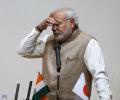
It doesn't appear to be happening yet, even though India's stock market has been Asia's best performer this year.

If oil prices rise, the government would face an uncomfortable political decision.

RustOrange co-founders Samik Sarkar, Shashank Agnihotri and Kuvalaya Singh share their story and learnings.

Usually, a fall in oil prices is followed with a cut in retail prices of auto fuels and the government passes on the benefit to consumers. However, Morgan Stanley believes gains this time around will remain capped.

Equity indices chalked up losses for the second straight session on Monday, in tandem with a bearish trend overseas as ratcheting up of hostilities in Ukraine and prospects of further rate hikes by the US Fed soured global risk sentiment. The rupee slipping to another all-time low against the US dollar amid foreign fund outflows added to the gloom, traders said. After tumbling over 800 points in intra-day trade, the 30-share BSE Sensex clawed back some lost ground to end 200.18 points or 0.34 per cent lower at 57,991.11.

'The global semiconductor shortage has inadvertently provided an immense fillip to the pre-owned car market'

'While foreign institutional investor flows are still negative, they will turn positive in the latter part of 2023 as India's resilient growth becomes perceptible.'

Qualcomm has been playing a key role driving India's wireless revolution

'As we expect the economy to continue to grow above the trend line, we expect capex decisions to be taken next year when there is more certainty about the cost of funding and the economy.'

It's the sovereign right of the Organization of Petroleum Exporting Countries to decide on the oil production capacities, Union Minister of Petroleum and Natural Gas Hardeep Singh Puri said Friday. Refraining from commenting on the controversial decision of OPEC on cutting oil production by two million barrels a day, which has taken the world by surprise, Puri said it is likely to be scrutinized very carefully. During an interaction with a group of Indian reporters, he said that India as one of the major consumers of oil and gas also has a major say in the global oil market.

Recovery from the second wave of the pandemic in April-May is expected to be swifter as compared to the first wave in 2020, according to the Confederation of Indian Industries (CII) chief executive officers (CEOs) poll of 119 top corporate. During the second wave, the lockdowns were largely designed to limit social gatherings and impact on economic activities was restricted. This helped arrest the impact of the second wave on economic growth, according to a survey conducted by the industry lobby group Confederation of Indian Industries (CII). About 59 per cent of the CEOs polled expect the recovery in sales to be better than in the first wave for their companies, while 46 per cent of them expressed a similar trend for their respective industry sectors.

This State-corporate 'cooperation' didn't begin with the arrival of the Modi government.
Many of the big licences, contracts, and even environmental clearances for the Adani group had come in the UPA's time, points out Shekhar Gupta.
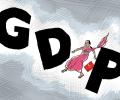
Chief economic advisor V Anantha Nageswaran on Tuesday said Indian economy will grow at over 7 per cent, down from above 8 per cent of growth rate projected in January. He, however, said that the economic momentum and the animal spirits are "unmistakable". "India's own growth rates have come off the projections made in January down to about 7-plus per cent for the current financial year," Nageswaran said speaking at Global Fintech Fest event in Mumbai.

Telecom operator Bharti Airtel will start rolling out 5G services later this month as it signed requisite agreements with Ericsson, Nokia and Samsung. At the recently held much-awaited spectrum auction for 5G services by the Department of Telecom, Airtel bid for and acquired 19867.8 MHZ spectrum in 900 MHz, 1800 MHz, 2100 MHz, 3300 MHz, and 26 GHz frequencies. "We are delighted to announce that Airtel will commence roll out of 5G services in August.

'There will be positive growth, but if you ask me whether we are going to have the original growth rate of 8%, the answer will be, no.'

Fitch Ratings on Friday said it has revised the outlook on India's sovereign rating to 'stable' from 'negative' as downside risks to medium-term growth have diminished on rapid economic recovery. Fitch Ratings kept the rating unchanged at 'BBB-'.

It is not without reason that Japanese consumer electronics companies such as Sony, Panasonic, Hitachi, Daikin and Sharp are investing significant sums in India.

His visit to India followed a few cancelled plans since he took office in July 2019 due to the coronavirus pandemic crisis, with the two leaders holding several virtual talks and eventually meeting in person on the sidelines of the COP26 climate summit in Glasgow last November.

The remarks by the CJI came against the backdrop of the recent remarks by Vice President Jagdeep Dhankhar who questioned the landmark 1973 Kesavananda Bharati case verdict that gave the basic structure doctrine.

The upcoming general elections will be the focus and the economy and market performance will pivot around that event. The general consensus is that the India stock market should be up around 10 per cent by the end of the year.

Services sector activities improved further and touched a five-month high in April driven by a surge in incoming new work orders that boosted business activity and supported a renewed increase in employment, according to a survey. The seasonally adjusted S&P Global India Services PMI Business Activity Index jumped to 57.9 in April, from 53.6 in March, highlighting a sharp rate of expansion that was the fastest since last November amid mounting price pressures. For the ninth straight month, the services sector witnessed an expansion in output.
The Indian economy may be registering strong growth, but nearly 20 per cent of the population or close to 250 million people of spent less than Rs 14 per person per day on consumption in 2004-05.

More than 70 per cent of Indian youth aged between 15 and 29 can't!

In the quarter ending June 2022, the growth of Internet subscribers was less than one per cent of all of 2021.

Indian industry snubbed Google Play's decision to cut by half its commission for developers when they make $1 million in annual revenue for in-app purchases, saying the US tech giant may continue its "abrasive & monopolistic abuse" as it owns the Android system. Google Play said Tuesday that beginning July 1 it would slash its 30 per cent billing fee to 15 per cent for developers globally when they make the first $1 million of their annual revenue.

India's passenger vehicle exports rose by 26 per cent in April-June 2022 aided by enhanced shipments to Latin America and Africa and a low base of the year-ago quarter that was hit by the second wave of COVID-19. As per the latest data released by the Society of Indian Automobile Manufacturers (SIAM), passenger vehicle shipments rose to 1,60,263 units in the April-June period of this fiscal as compared with 1,27,083 units in the same quarter of 2021-22. Passenger car shipments saw an 88 per cent year-on-year growth at 1,04,400 units while utility vehicle exports rose 18 per cent to 55,547 units during the period under review, SIAM data showed.
